
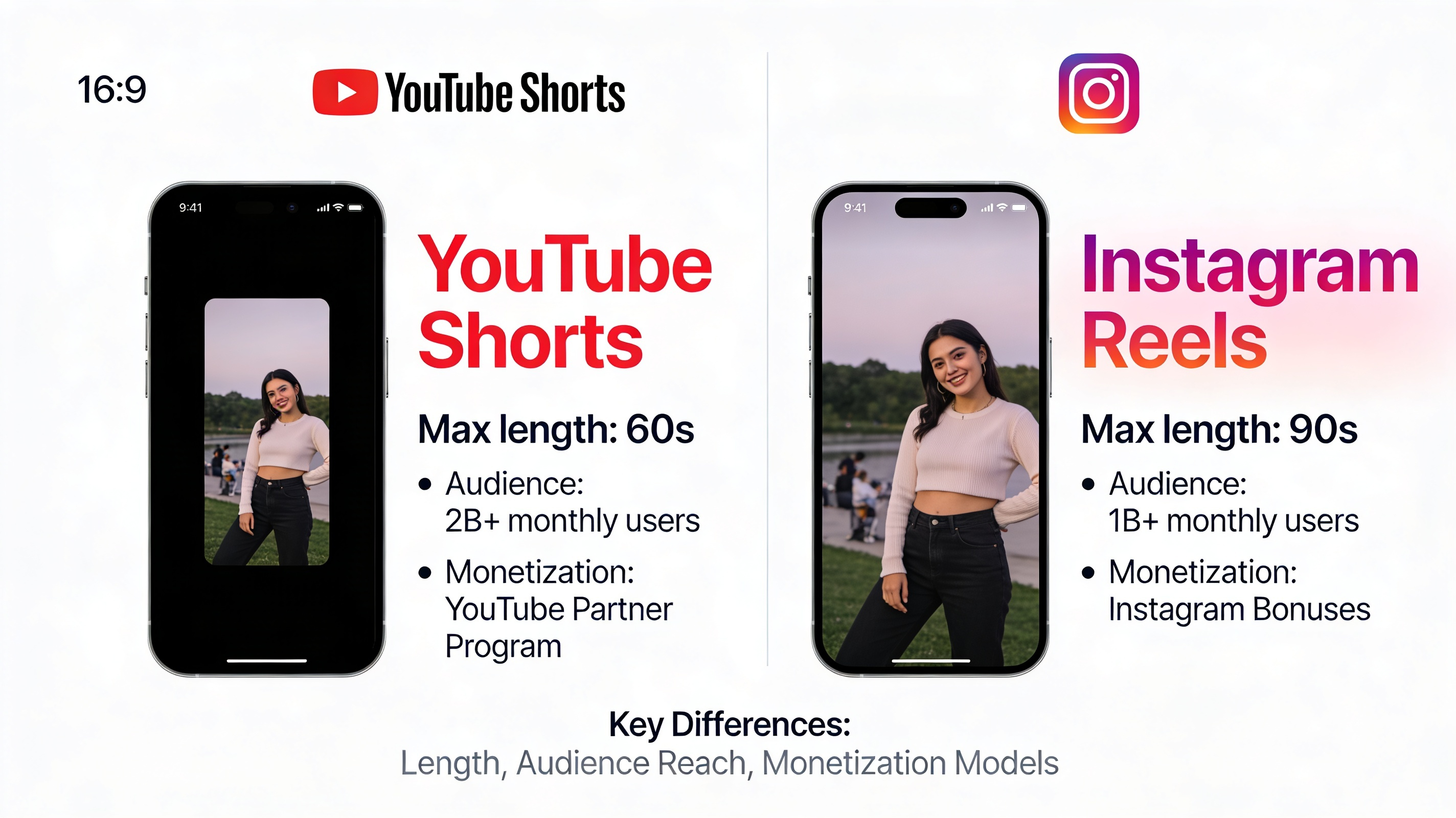
YouTube Shorts vs Instagram Reels: Which Actually Drives Growth?
Same format, same length, completely different results. Posting the same short video to both platforms doesn't get you the same outcome, and here's why.
Short-form content is everywhere right now between YouTube Shorts, Instagram Reels, and TikTok. A lot of creators assume they can post the exact same video everywhere and get similar results across the board. That's not how it plays out in practice because each platform distributes content in a fundamentally different way.
The core difference comes down to discovery vs network
YouTube is built around discovery. It's constantly testing content against new audiences trying to find what people want to watch, even if they've never seen your channel before. Instagram leans much more on your existing network, showing your content primarily to followers and people with similar interests to your existing audience.
In short
YouTube finds new viewers through algorithm testing. Instagram shows content to people already connected to your audience in some way.
YouTube Shorts: built for fast reach
YouTube Shorts are aggressive when it comes to distribution. Even a brand new channel with zero subscribers can get pushed to a large audience quickly if the content performs. YouTube is constantly testing Shorts against small groups, and if people watch without swiping away, it keeps expanding the audience.
This makes Shorts particularly strong for getting views fast, reaching completely new audiences, and growing a channel from zero. It's very momentum based, when something starts working it can snowball quickly.
Instagram Reels: built for interaction
Instagram works differently. Your Reels are shown primarily to followers and people with similar interest profiles. This tends to generate more likes, comments, and direct engagement because the audience already has some connection to your content or niche.
But that also means it doesn't scale in raw reach the same way YouTube does. Growing from zero on Instagram is generally a slower, more network-dependent process.
YouTube Shorts
Better for reach and growth from zero. Algorithm actively finds new viewers for you.
Instagram Reels
Better for engagement and interaction with an existing or similar audience.
If pure visibility is the goal, YouTube usually wins. If building connection with an audience that already somewhat knows you is the goal, Instagram tends to be stronger.
The hidden problem with short-form traffic
Here's something most people don't think about. Short-form traffic is unstable by nature. You can get thousands of views one day and drop to almost nothing the next. People are scrolling, not searching, so there's no consistent demand pulling new viewers to your content over time.
A view from a Short is worth less than a view from search in terms of long-term signal value. The person scrolling didn't specifically want your content, they just didn't swipe away fast enough. That's a much weaker signal than someone who actively searched for what you made.
Why this matters for long-term growth
Shorts are excellent for exposure but they don't always translate into lasting growth. They generate short bursts of attention without building the kind of consistent watch time and viewer behavior that creates stability. For that you need search-based content, longer videos, and consistent viewer patterns over time.
"Shorts get you noticed. Search-based long-form content is what gets you found again and again by people who actually want your content."
The smarter approach is using both
Use Shorts for attention and reach. Use longer, search-optimized content for actual growth and channel stability. One brings new people in, the other keeps them coming back and builds the long-term signals that compound over time. Neither one alone is the full picture, but together they cover both sides of the equation.
Want more than just short-term views?
Short-form content brings attention quickly, but real growth comes from content that keeps performing over time. That's where strong signals and consistent viewer behavior matter most.
Get Started →