
Right now, someone with a worse video than yours is sitting on page one for your keyword. They're not a better creator. They just figured out the signals game before you did. Every day that goes by is another day they collect the clicks that should be going to your links.

You already know what it feels like. You spend hours on a video, you optimize the title, you pick a good keyword, you hit publish. A week later it has 80 views and it's going nowhere. Meanwhile someone with a worse video is sitting at position 2 for the exact keyword you wanted.
It's not luck. It's signals. And right now your videos aren't sending enough of them.
Here's the part that actually stings. When someone searches your keyword and clicks a competitor's video first, they watch it, they trust it, they click the affiliate link and they buy. That sale is gone. Not delayed. Gone. If they find your video a week later they might think "oh this one looks better" but it doesn't matter. They already bought. You did the work, you made the video, and someone else collected the commission because their video showed up first. That's not a "maybe next time" situation. There is no next time for that buyer.
Every day your video sits on page three is another day someone else is collecting commissions on the exact audience you made content for.
YouTube's algorithm updates in 2026 shifted even harder toward what they call satisfaction signals. That means watch time, retention, replays, and how long someone stays engaged with your content. Keywords and tags still help you get found in search but they don't keep you there. What keeps you there is people actually watching.
YouTube's own documentation now explicitly states that videos which generate strong viewer satisfaction signals get prioritized in both search and suggested placements. High retention is no longer just a nice metric. It's the main one.
This is actually great news for affiliate creators who know how to work it. Because satisfaction signals can be built. And when they are, the algorithm does the rest for you.
Before a video can rank for a keyword, YouTube runs it through a quick test. It shows it to a small group and watches two things very closely. Did people click on it when they saw it? And did they stay and watch once they did? If both answers are yes, the video gets pushed to more people. If either answer is no, it disappears.
Real result — Impressions click-through rate
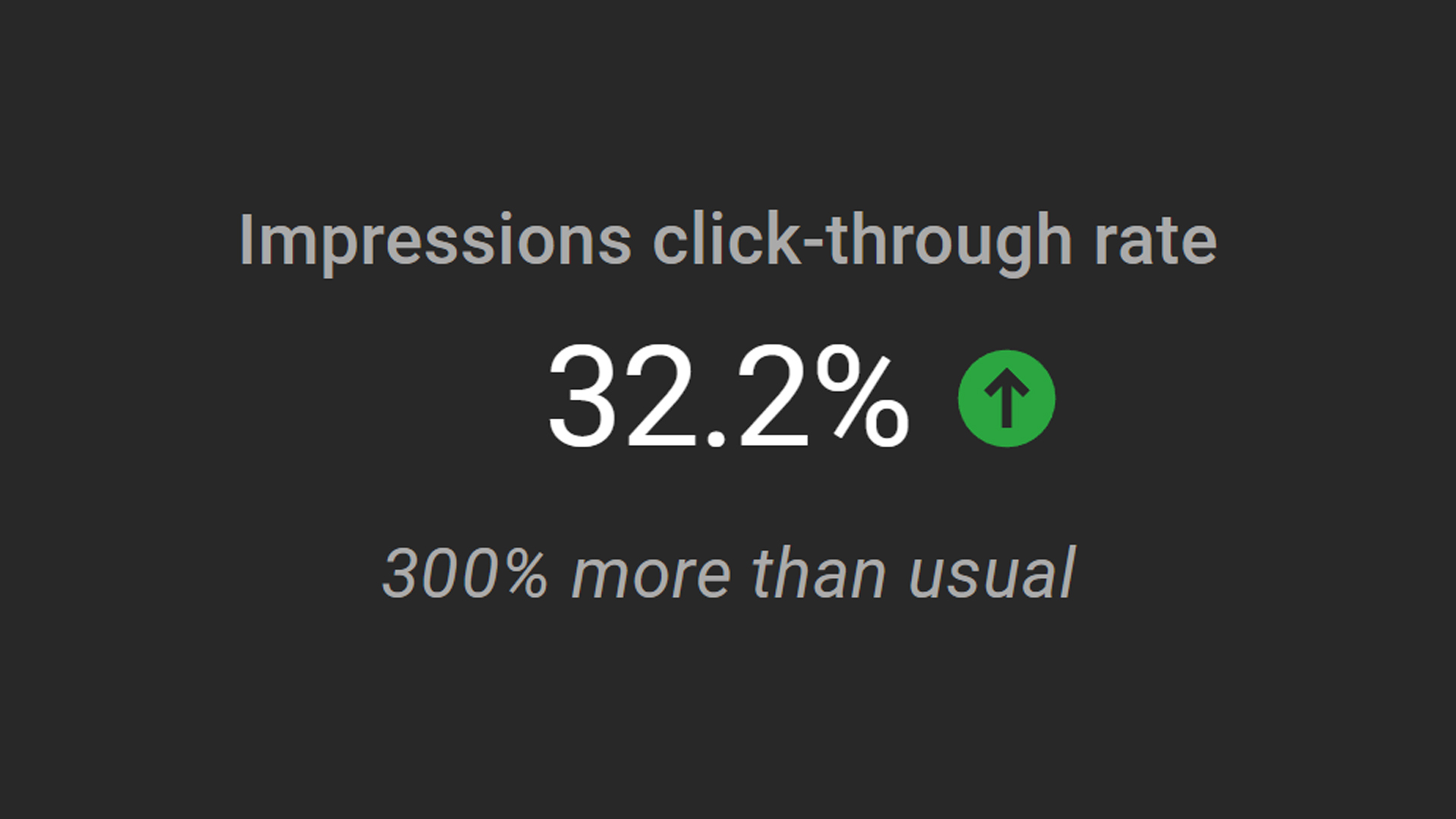
32.2% CTR is roughly 10x the YouTube average of 2-5%. When YouTube sees this it immediately starts showing the video to a much larger audience.
That CTR number above is from a real customer video. The average YouTube video gets somewhere between 2% and 5%. Getting 32.2% means that every time YouTube showed that thumbnail in search results, nearly 1 in 3 people clicked it. That's the kind of signal that makes the algorithm take notice immediately.
Here's where most affiliate videos fall apart. They might get decent clicks from a good thumbnail but then people leave early because the video didn't match what they expected. YouTube reads early drop-off as a bad sign and pulls the video back down. What you need is people clicking AND watching.
Real result — Audience retention on a long-form video
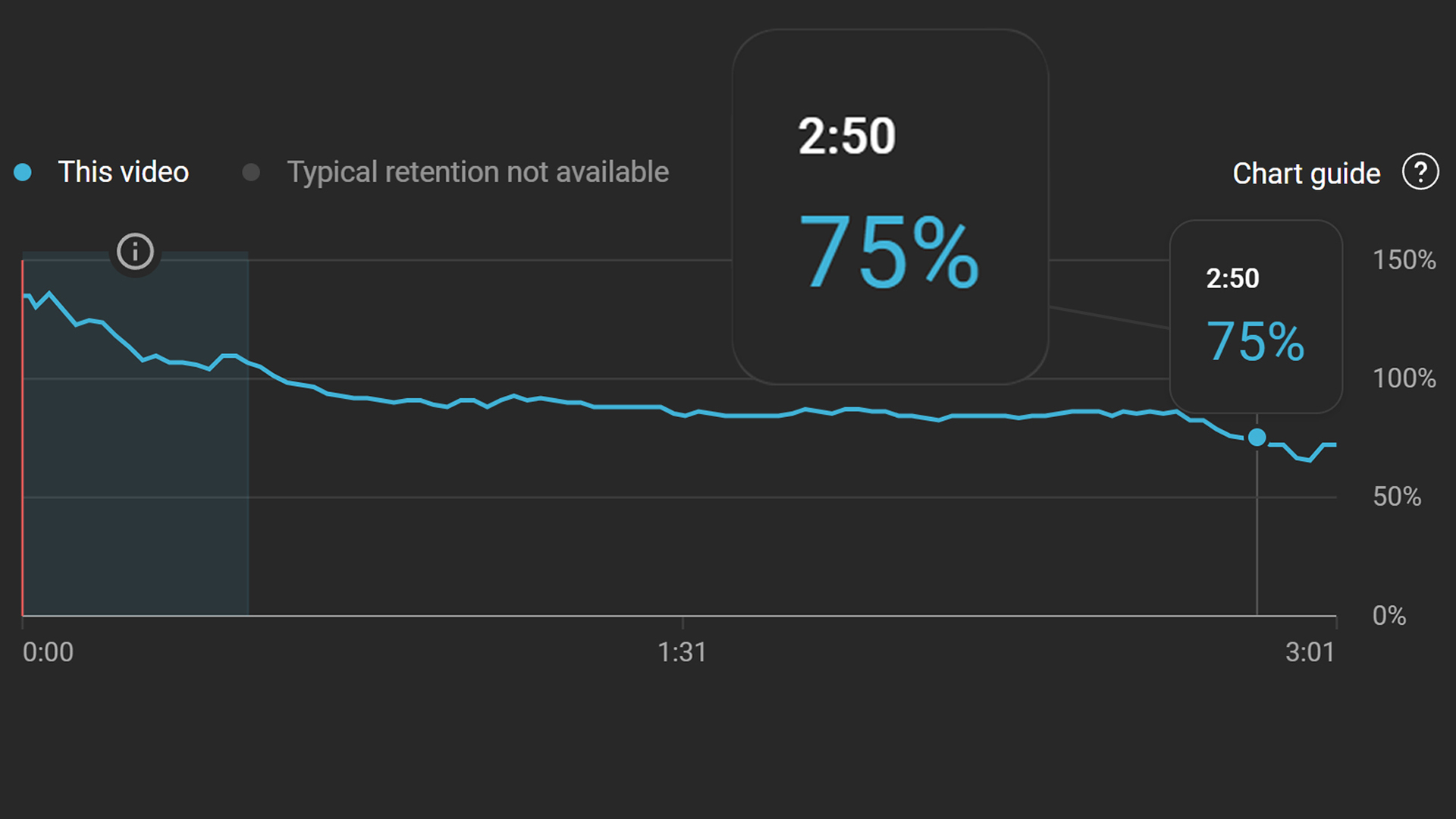
75% retention at 2 minutes 50 seconds means three quarters of viewers were still watching nearly all the way through. That's an exceptionally strong satisfaction signal.
When CTR and retention are both strong at the same time, that's when videos start climbing and holding positions in search. One without the other doesn't work. You need both.
If you're using YouTube Shorts as part of your affiliate strategy, the same signals apply. The difference is that Shorts can loop, meaning someone can watch your video more than once without doing anything. That's a massive retention signal and YouTube treats it exactly the way you'd hope.
Real result — YouTube Shorts retention with looping

255% retention means people watched this Short an average of 2.5 times each. YouTube sees this as one of the strongest possible satisfaction signals a video can send.
255% retention on a Short is not a typo. That's what happens when a Short loops and people don't swipe away. YouTube registers every loop as continued watch time and it stacks. This is one of the most powerful signals you can generate for a Short and it directly affects how widely YouTube distributes it.
Live from Trend Radar — What's exploding on YouTube right now
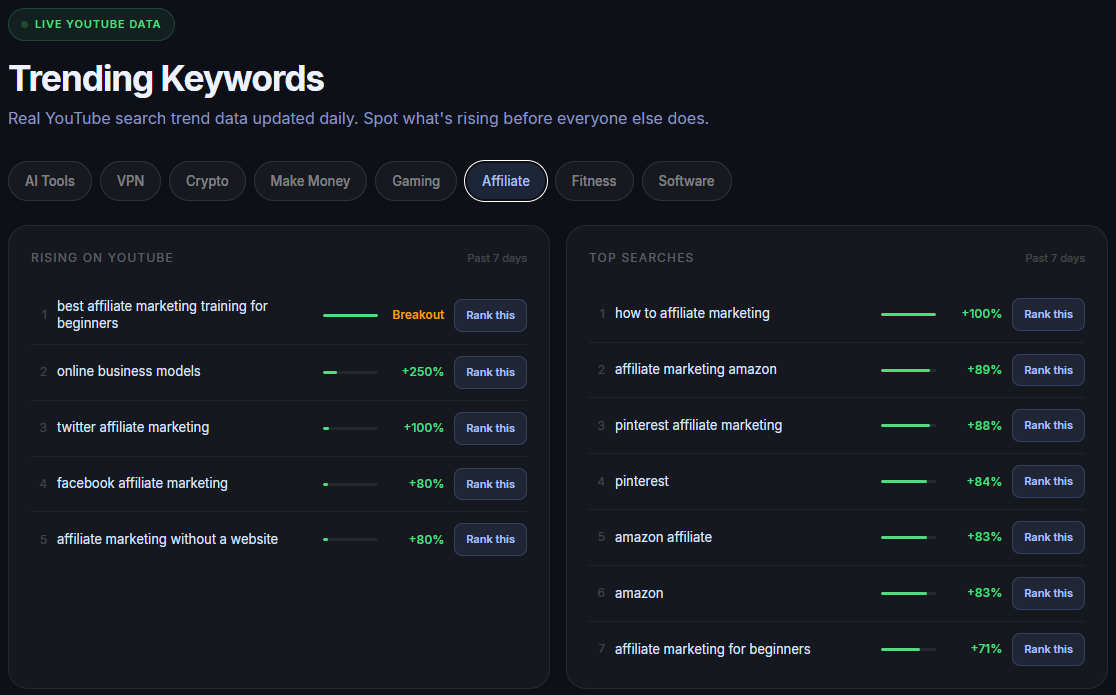
This is what your competitors are seeing. The ones already ranking for "best affiliate marketing training for beginners" are collecting commissions right now. This tool is exclusive to ViralEdge customers.
Most content creators just want views. Affiliate creators need something more specific. They need to rank for the keywords that people search right before they're about to buy something. "Best VPN for streaming", "top AI writing tools 2026", "Jasper AI review". These are the searches where someone clicks your link and actually converts.
Ranking for a high-intent keyword doesn't just bring views. It puts your video in front of people who are already close to buying. One video in the right position can pay you every single month.
In these niches the difference between ranking on page one and sitting on page three is the difference between making money from a video and making nothing. The keyword has the buyers. You just need to be visible when they search.
When those three things line up, YouTube stops ignoring your video and starts pushing it. That's the whole loop. The problem for most affiliate creators is they never get it started because the early signals aren't strong enough to trigger it.
That keyword you're targeting has a limited number of spots on page one. Right now those spots belong to someone else. Not because they're better at YouTube. Because they got there first and they have the signals to stay there.
Your videos are already good enough. Stop letting the wrong people collect the clicks that should be yours. We help your videos hit the watch time and retention bar YouTube rewards, so they can take that position and hold it.